Book your appointment

Tattoo studio Chhattarpur South Delhi

Art that stays.

Custom tattoos. Deeper conversations. A safe space to be yourself — at Annie’s Tattoo, Chhattarpur.

What you can count on

  • Custom designs

    Your idea, our art.

  • Hygienic & safe

    Your safety, always.

  • Fine line

    Precision in every detail.

  • Delhi studio

    A creative, welcoming space.

About Annie’s

More than ink.
A ritual of making something yours.

Annie’s Tattoo is tattoo artist Annie Gurung’s studio in Chhattarpur, South Delhi, built on art, trust and meaningful connections.

Every tattoo is a collaboration — a story we create together.

PeoplePlacesStoriesTattoos

Years
12+
Happy clients
1000+
Unique designs
2000+

Our services

Tattoos
for every story

DifferentStylesSame soul

Same skinDifferent stories

DelhiIndia

Featured artwork

Recent creations

No. 01–14Real work, photographed at the studio
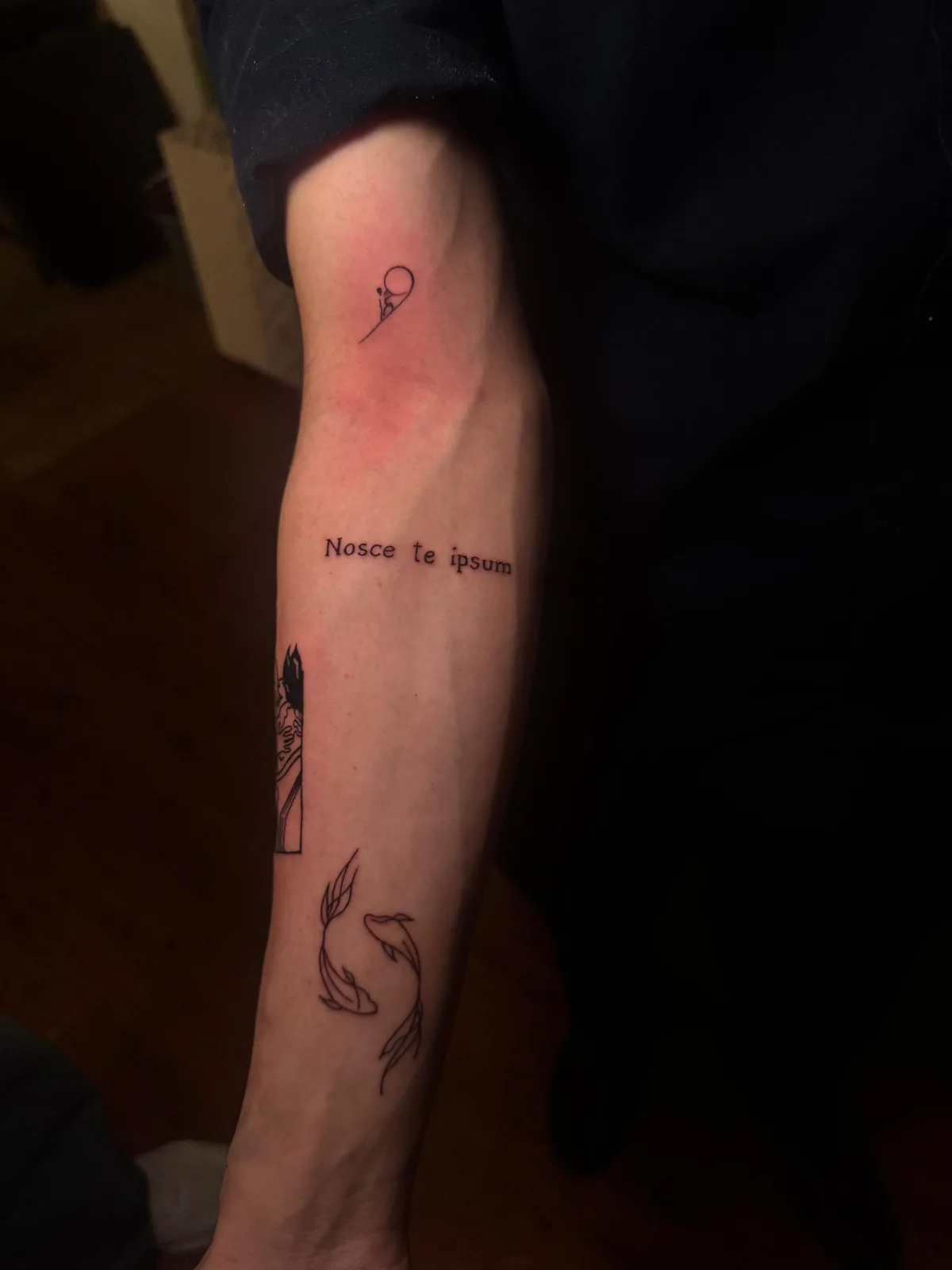
  • No. 01
    Fine-line koi fish tattoo swimming up a forearm, with the words nosce te ipsum lettered above it

    Koi & nosce te ipsum

    Japanese
  • No. 02
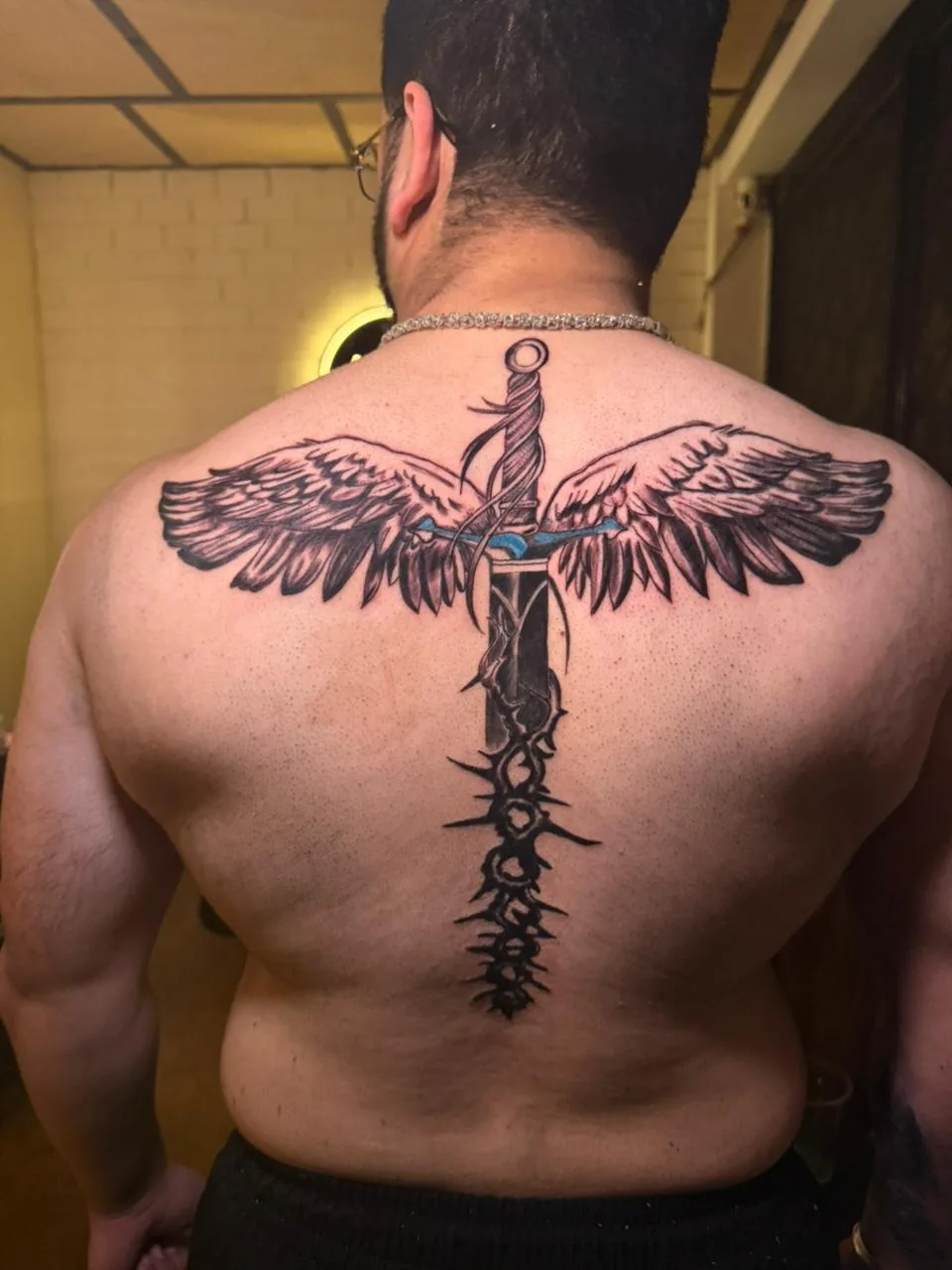
    Large black and grey tattoo of a sword with spread wings running down the centre of a man’s back

    Winged sword

    Custom
  • No. 03
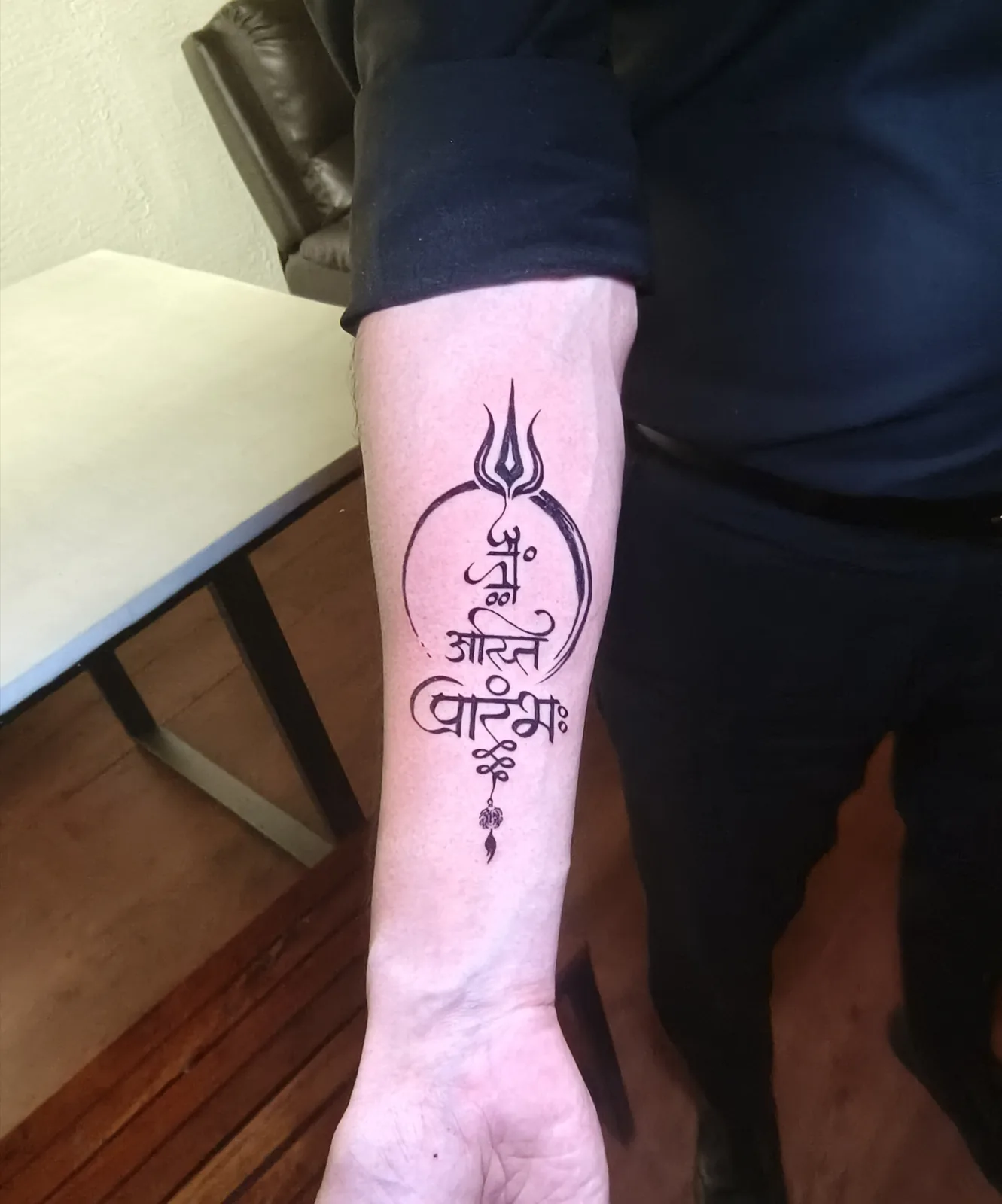
    Bold black tattoo of Om, a trishul and a line of Sanskrit script on the inner forearm

    Om & trishul

    Custom
  • No. 04
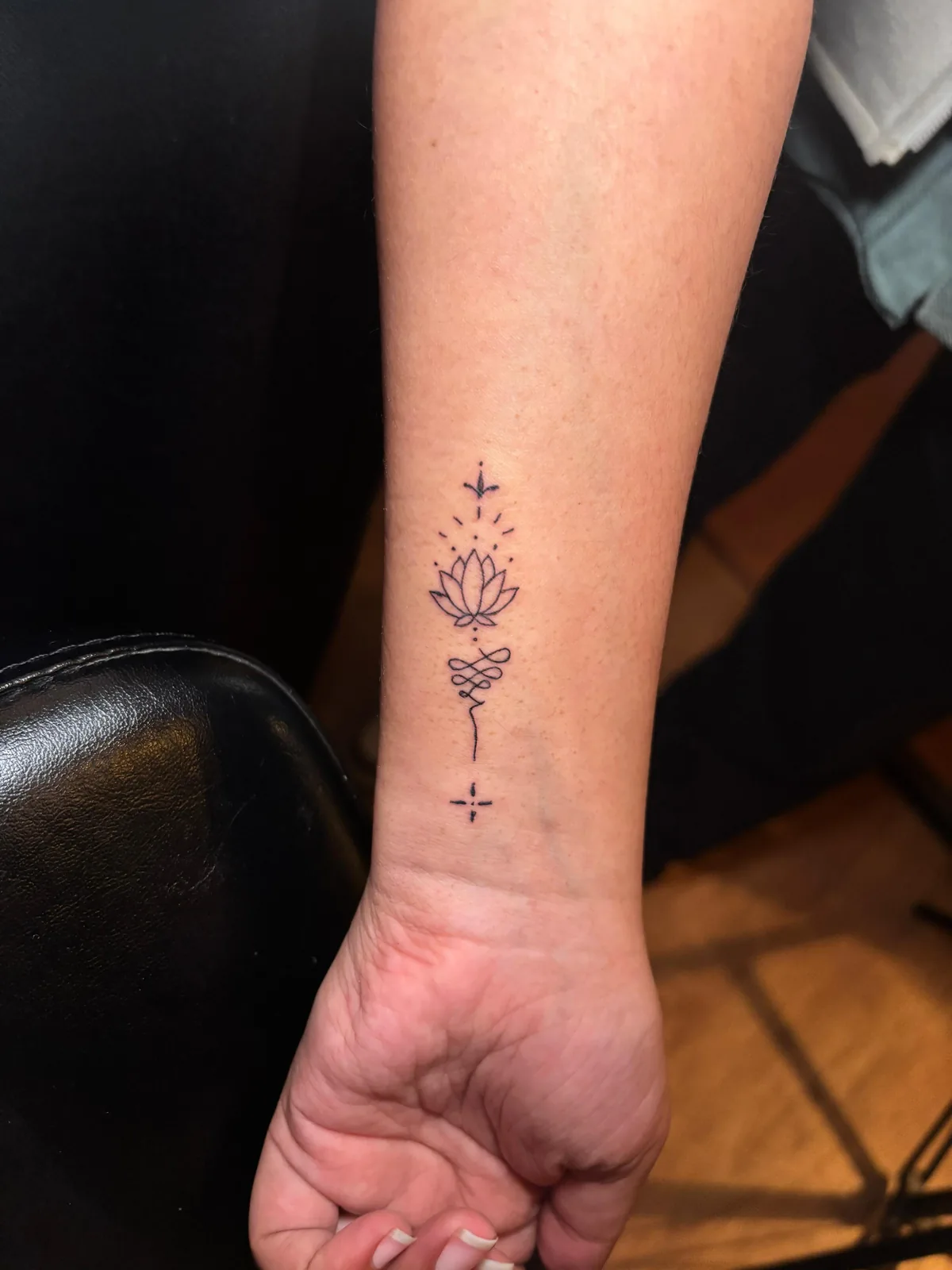
    Small fine-line lotus and unalome tattoo on the inside of a wrist

    Lotus unalome

    Mandala
  • No. 05
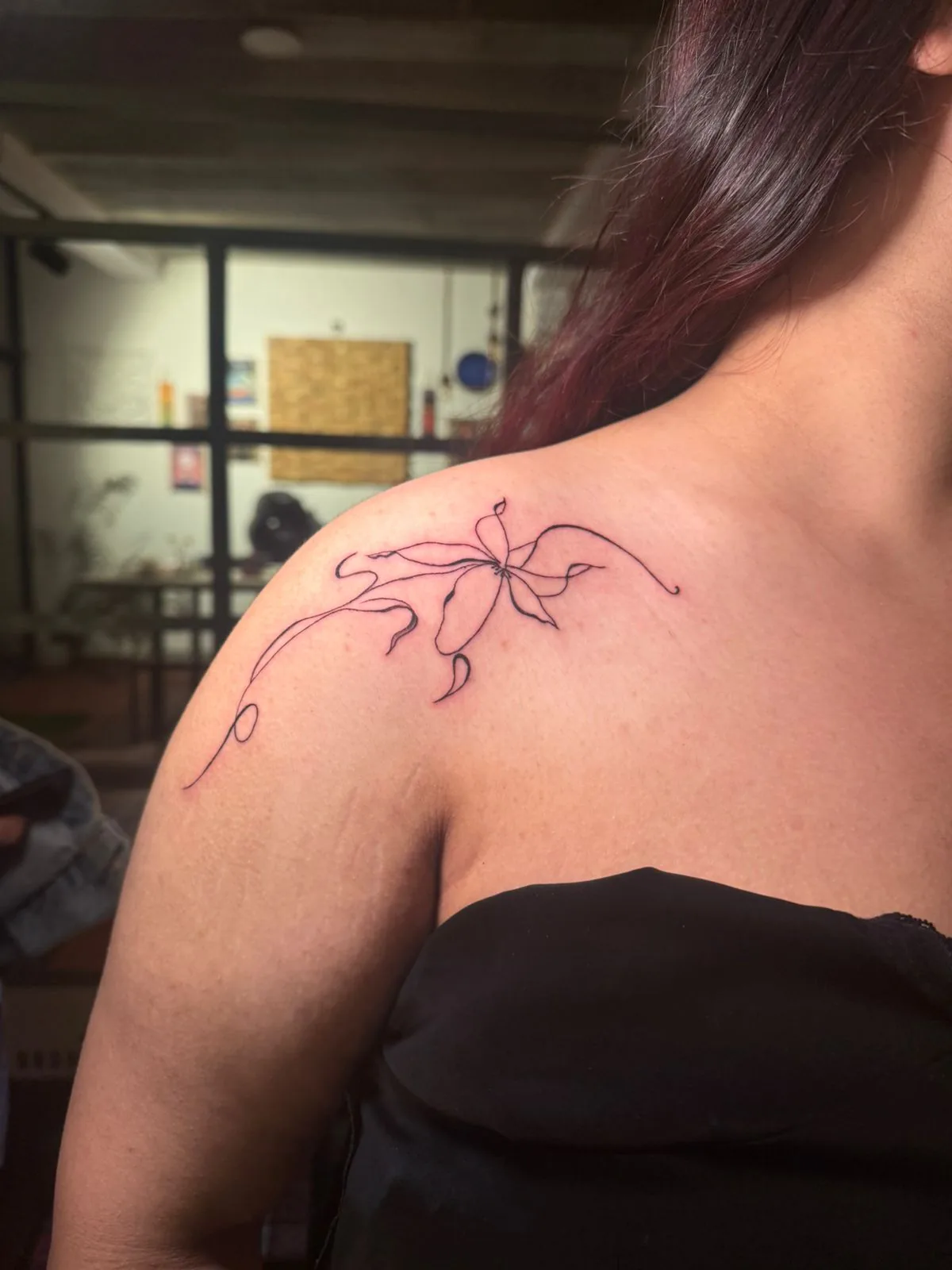
    Fine-line lily flower tattoo with a touch of pink curling over a woman’s shoulder

    Lily on the shoulder

    Floral
  • No. 06
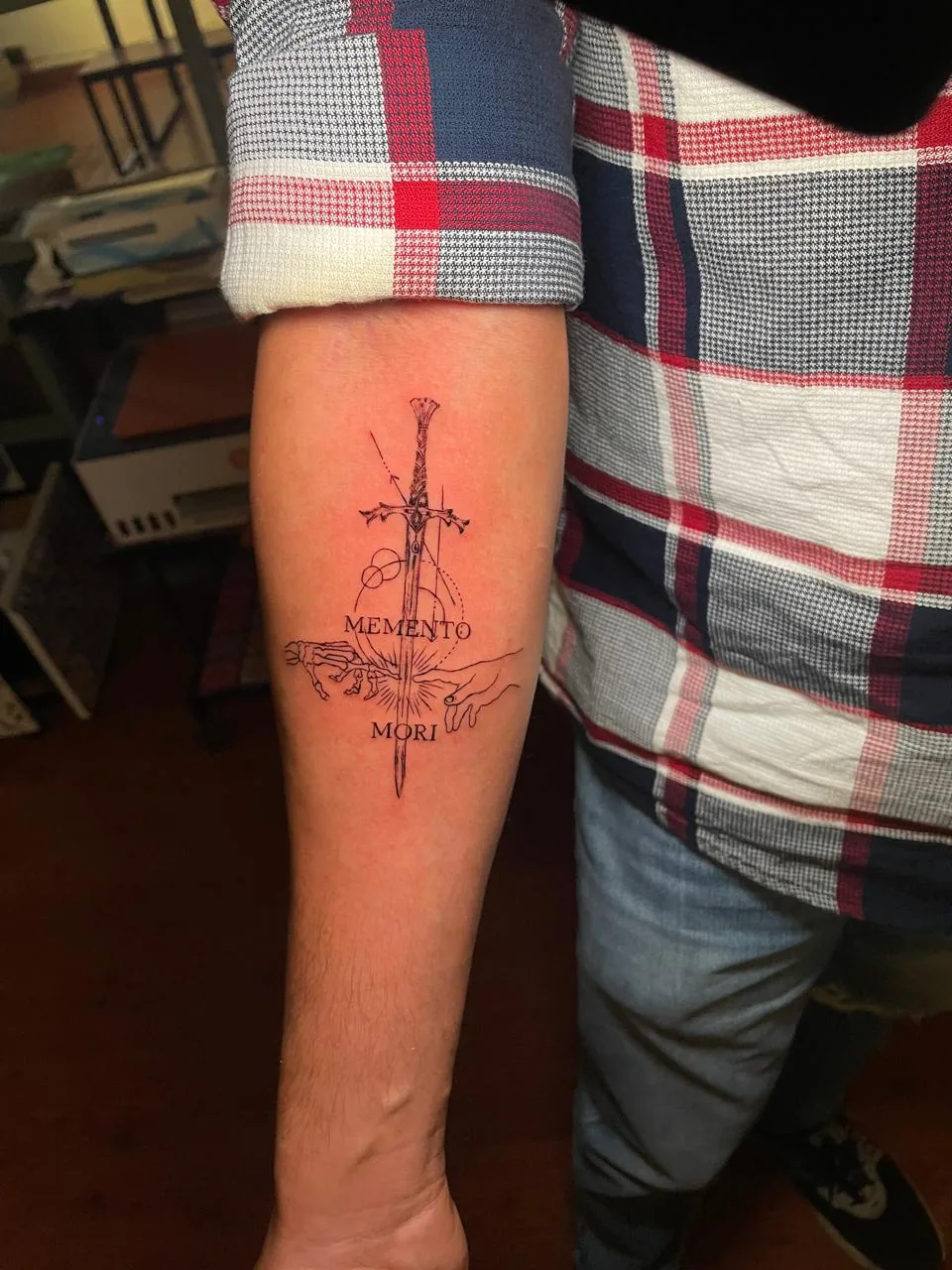
    Forearm tattoo of a sword on spread wings with the words memento mori lettered across the blade

    Memento mori

    Custom
  • No. 07
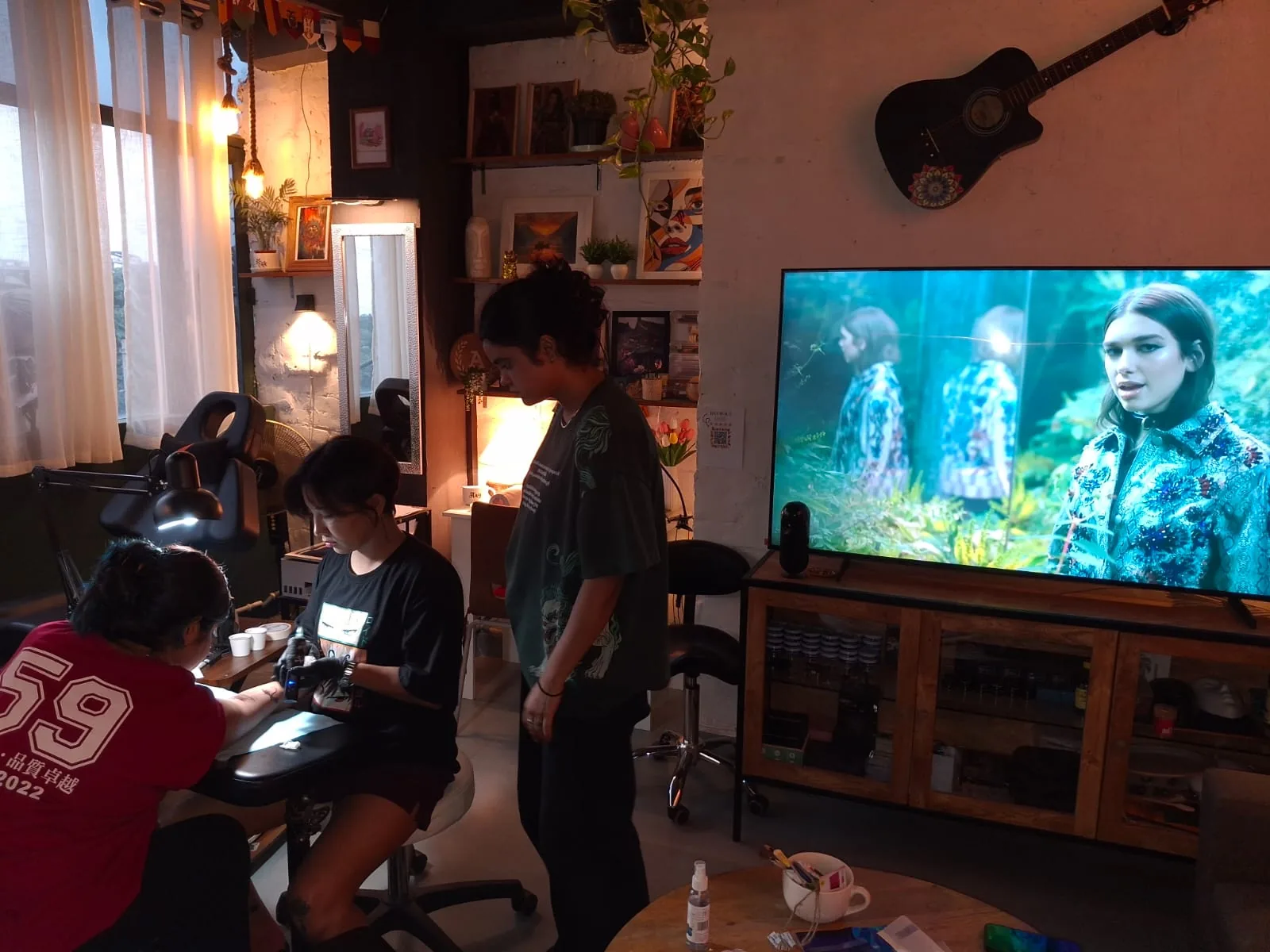
    Inside Annie’s Tattoo studio in Chhattarpur, Delhi: the artist tattooing a client while a friend watches, with a guitar and TV on the wall

    Session in progress

    Studio
  • No. 08
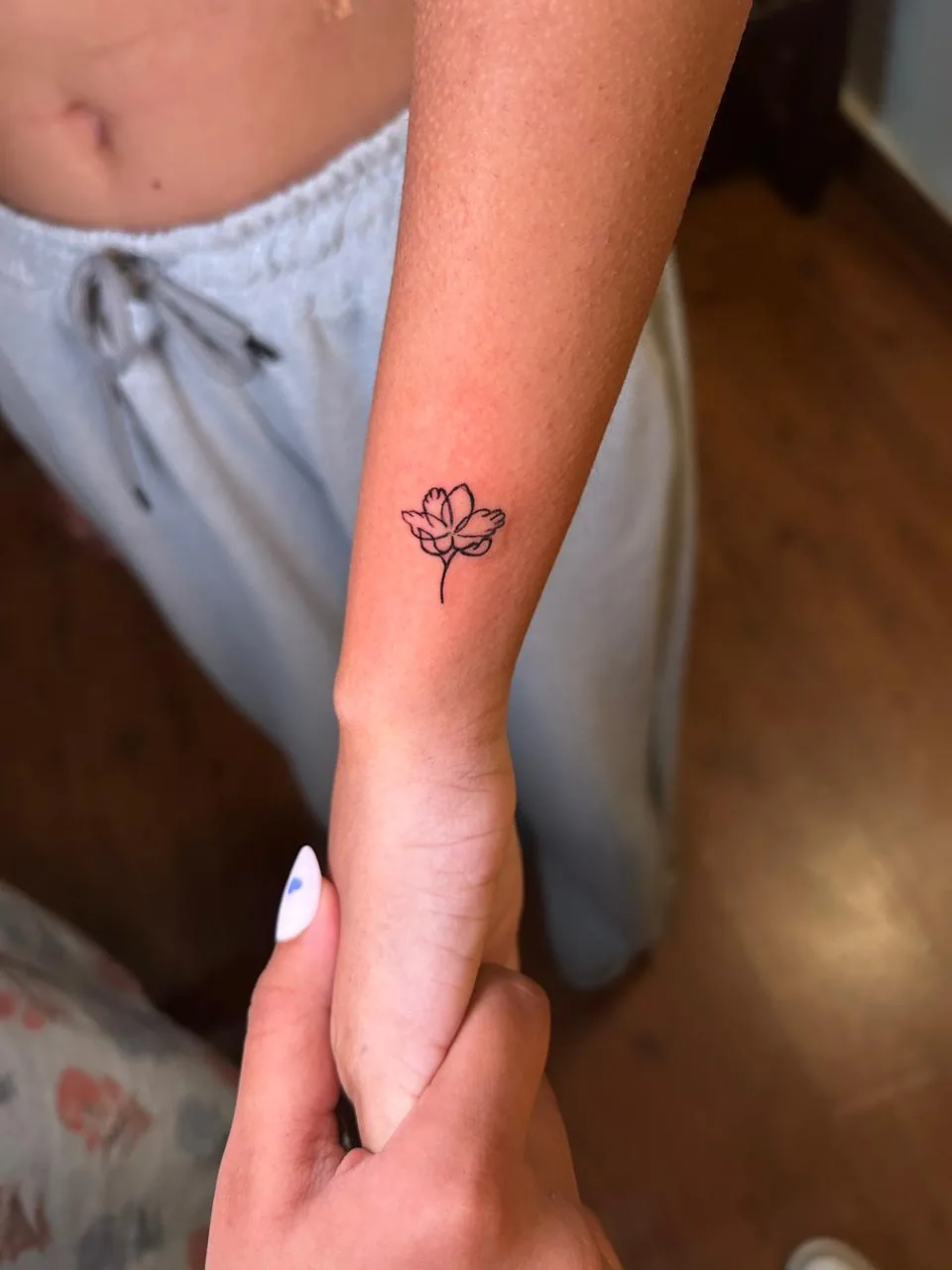
    Tiny fine-line flower tattoo on the inside of a wrist

    Wrist flower

    Floral
  • No. 09
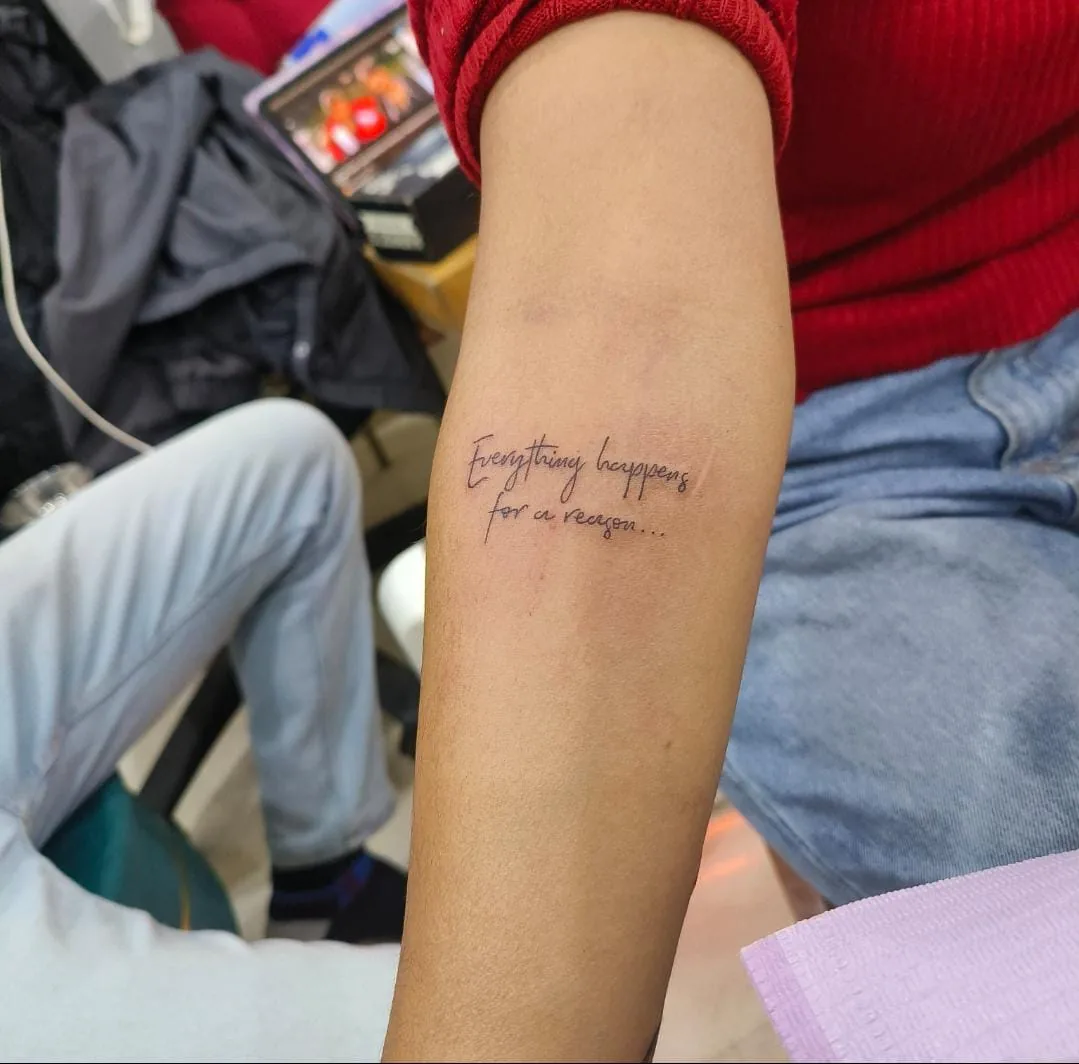
    Handwriting-style script tattoo reading Everything happens for a reason on the inside of an upper arm

    Everything happens for a reason

    Fine line
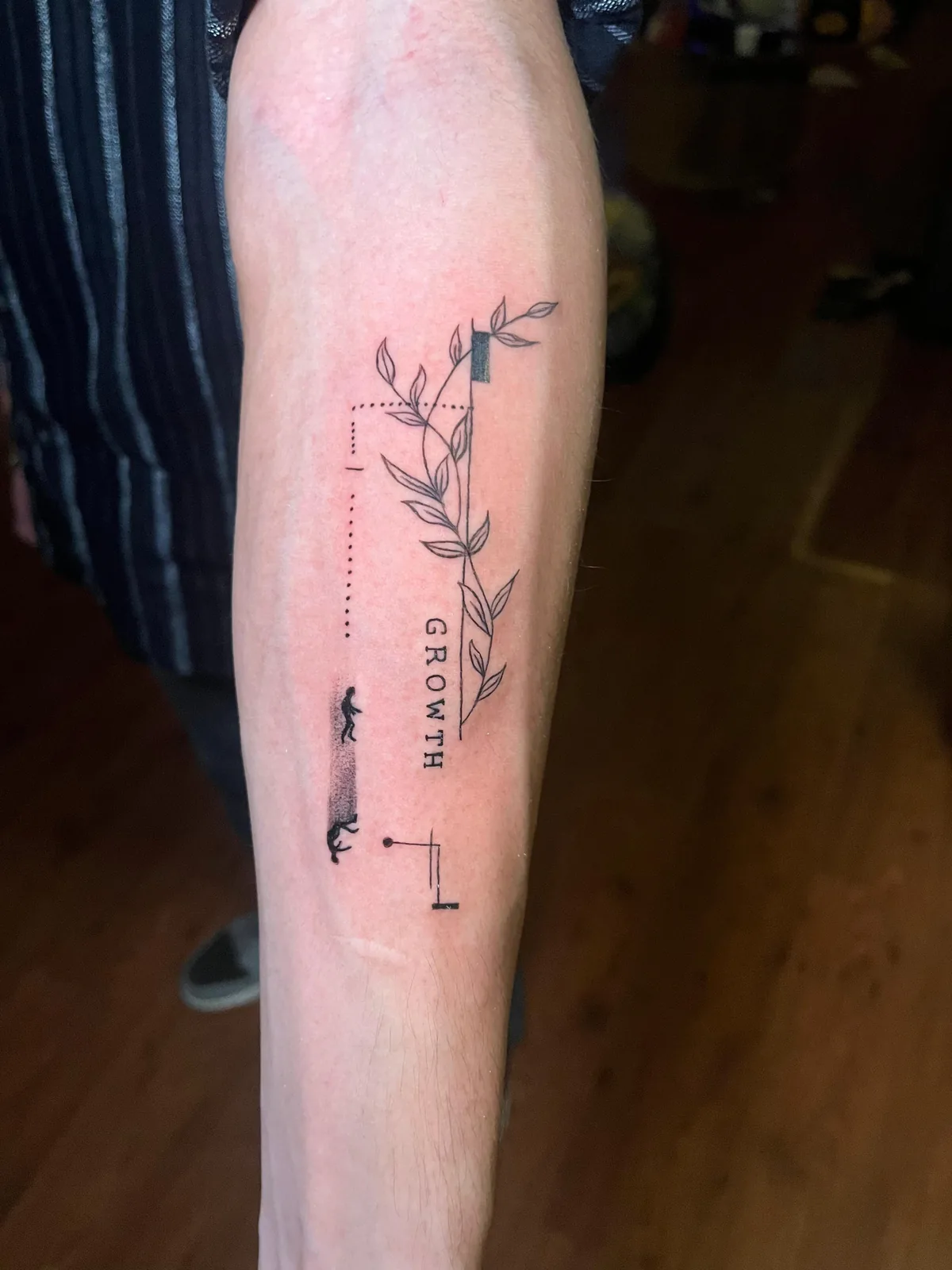
  • No. 10
    Fine-line forearm tattoo of the word GROWTH beside a climbing sprig and a thin geometric frame

    Growth

    Geometric
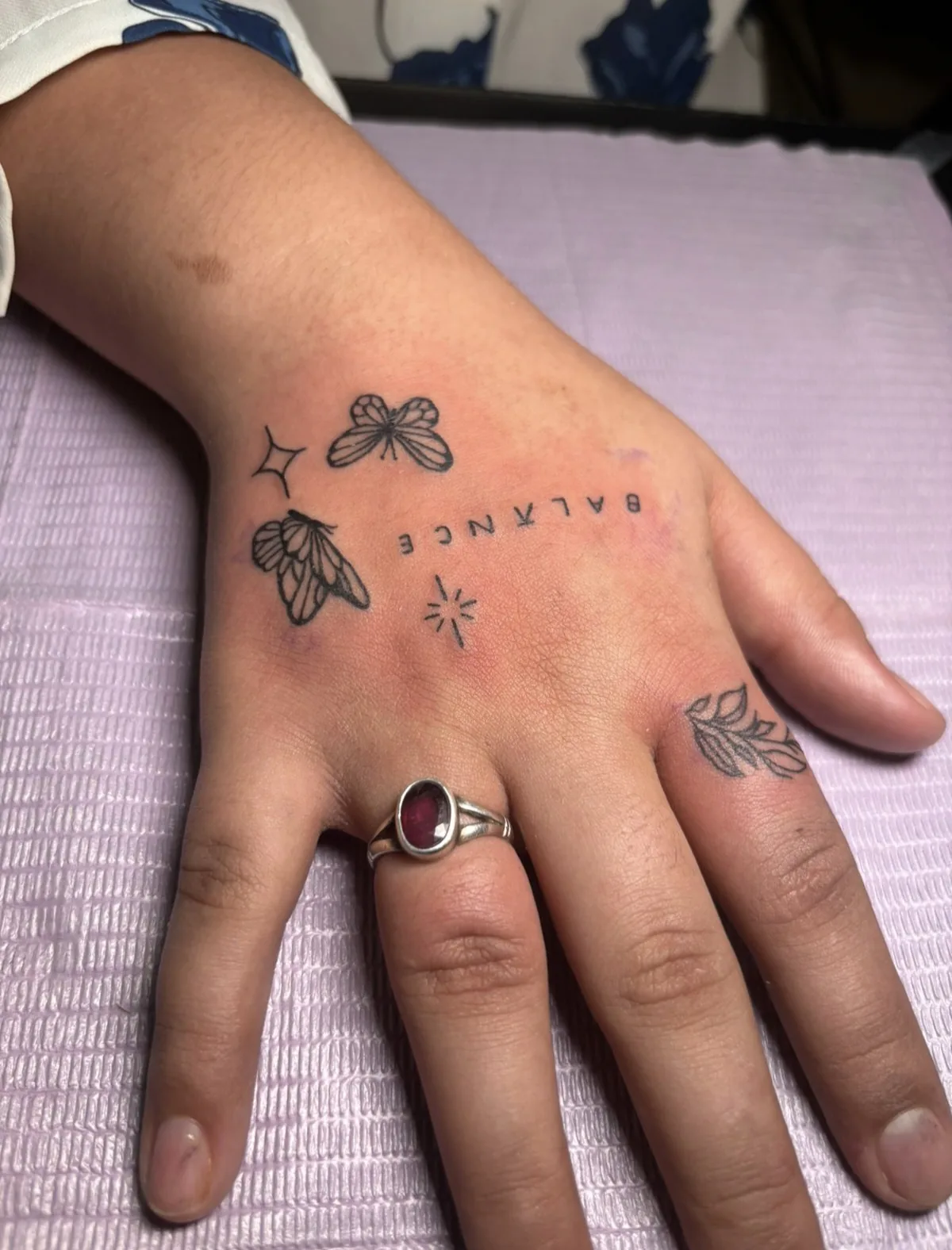
  • No. 11
    Fine-line butterfly, sparkle and the word BALANCE tattooed on the back of a hand

    Balance

    Fine line
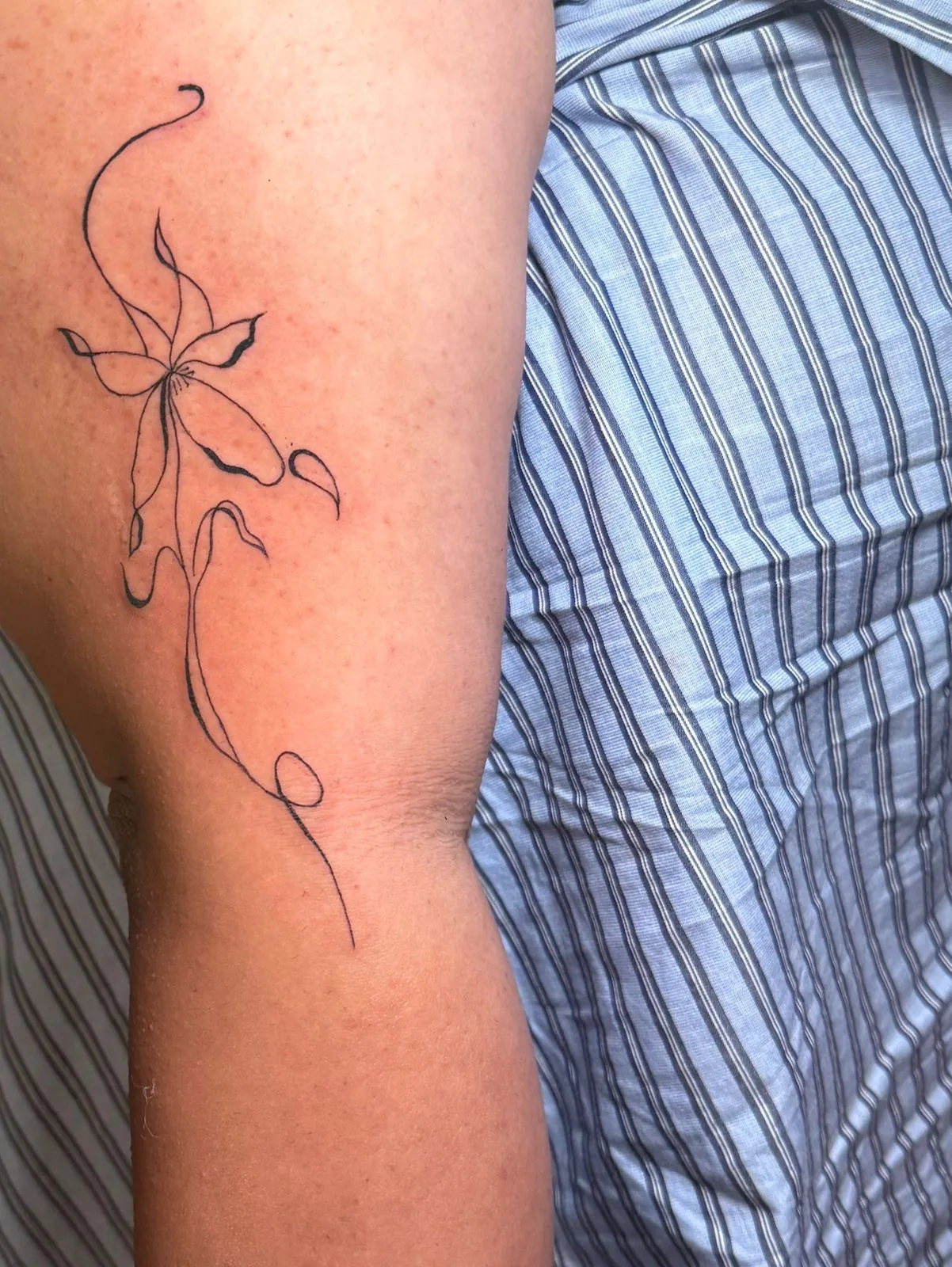
  • No. 12
    Flower tattoo drawn in one continuous fine line on the back of an upper arm

    Single-line bloom

    Floral
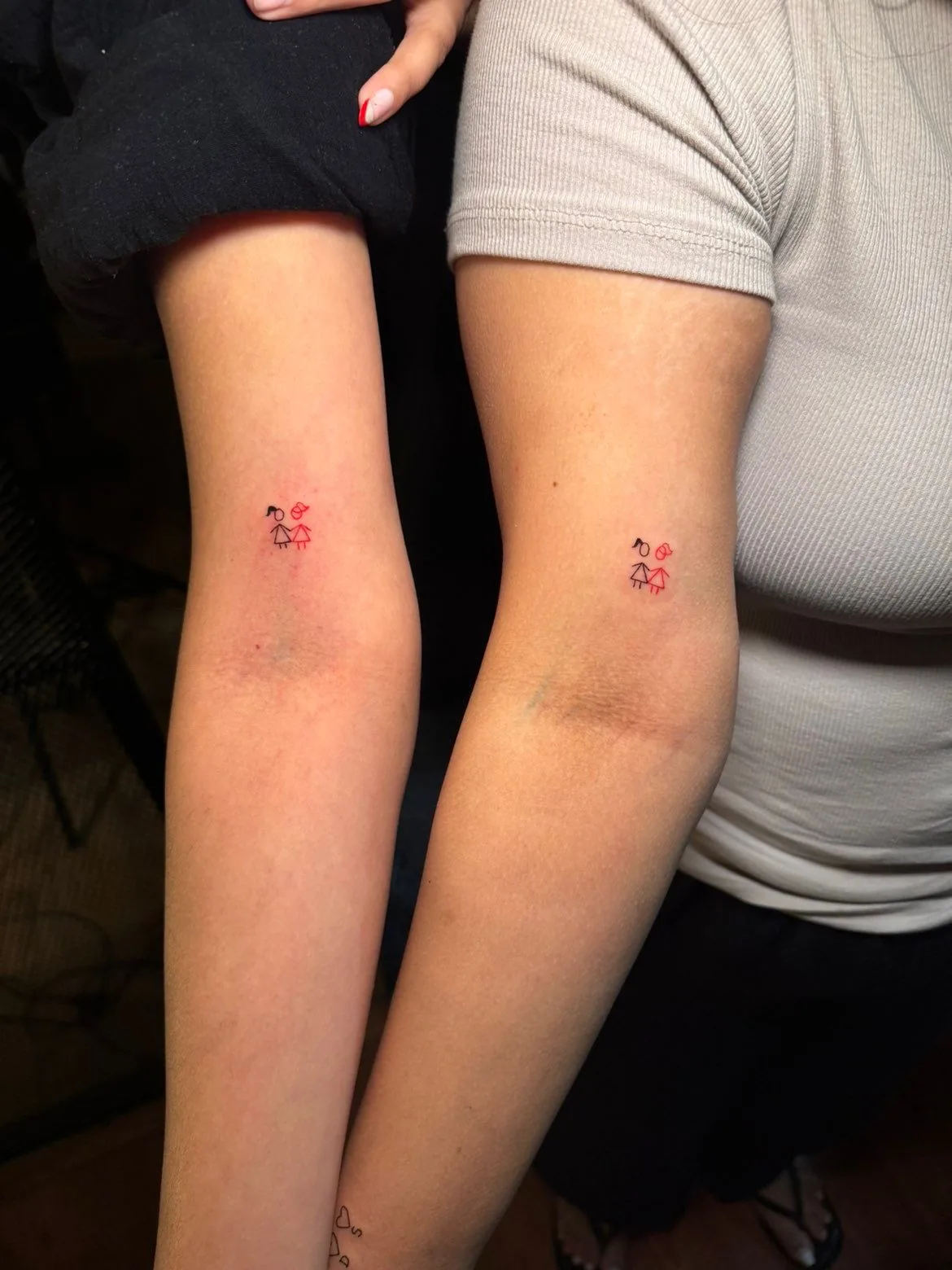
  • No. 13
    Two people showing matching small tattoos in the same spot on each arm

    Matching pair

    Fine line
  • No. 14
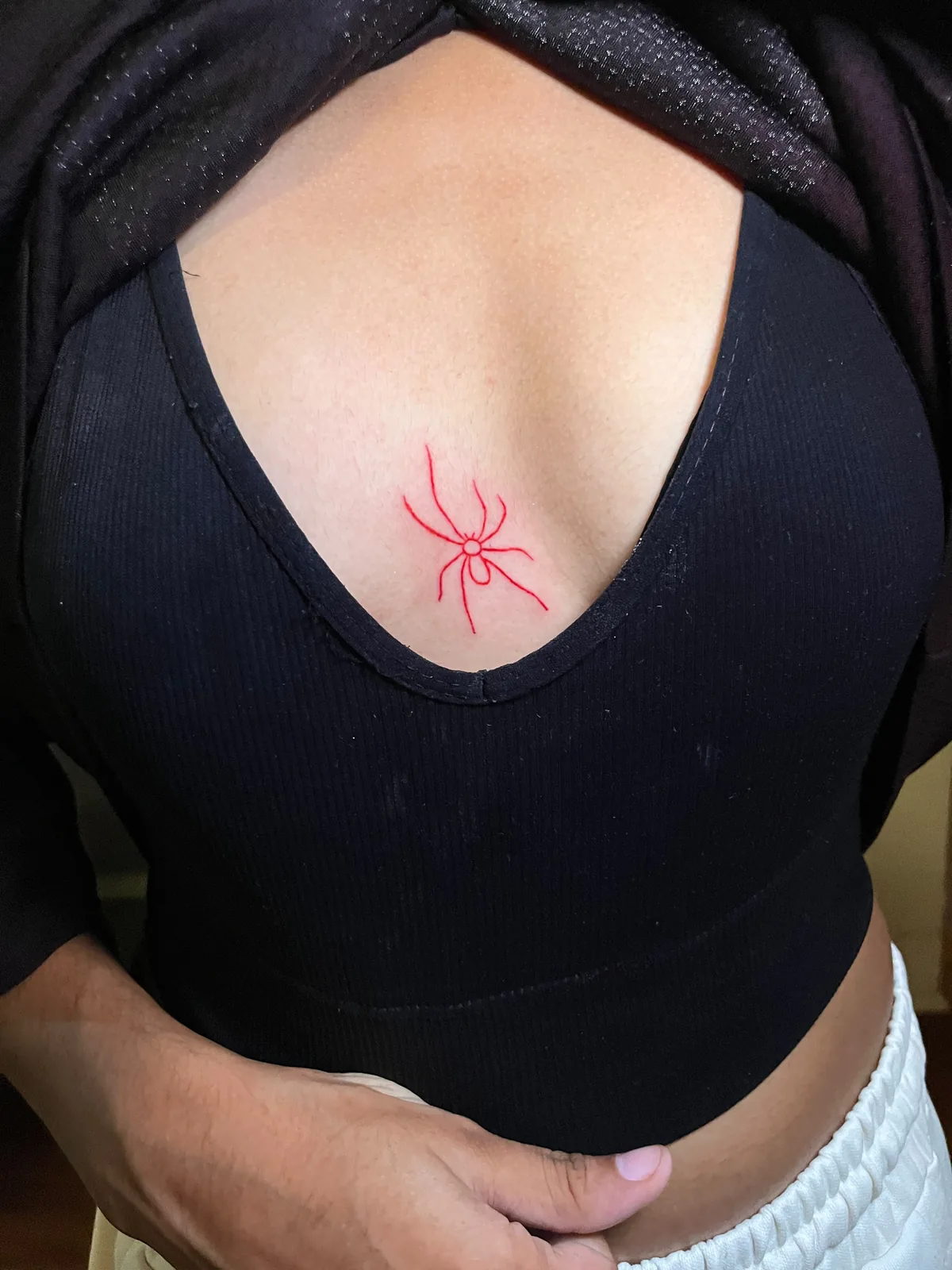
    Small red spider tattoo below the collarbone

    Red spider

    Custom

Every tattoo holds a feeling, a memory or a new beginning.

ArtHealsPeople

No. 01

Japanese

Koi & rising sun

Photographed at the studio in Chhattarpur. Every piece is drawn for the person who wears it.

Book this style

Book an
appointment

Turn your idea into something meaningful.

No payment now. Send a request and we’ll confirm your slot within a day.

01of 04

Choose your style

Pick the direction that feels closest. We’ll shape the details together.

Testimonials

Kind words.
Real people.

A few words from the people who trusted us with their skin, and their stories.

  • “Incredible experience! Annie really listens and brings your ideas to life. The whole process felt so comfortable.”

    Riya Delhi
  • “Such attention to detail and a warm, welcoming space. You can truly feel the care behind the art.”

    Karan Gurgaon
  • “The best tattoo studio in Delhi. Clean, professional and insanely talented. Already planning my next one!”

    Simran Delhi

Good to know

Questions, answered.

What people ask before their first visit to our tattoo studio in Chhattarpur, South Delhi. Anything else — just ask.

Ask us anything
Where is Annie’s Tattoo studio in Delhi?

Our tattoo studio is at 100 Feet Road, near Dhan Mill, Chhattarpur, South Delhi (PIN 110074) — close to Mehrauli, Saket and Vasant Kunj, and within easy reach of Gurugram. Look for the glowing A|T sign: if you can see it, you have found us. Open the studio in Google Maps.

How do I choose the best tattoo studio in Delhi?

Look for five things: a portfolio in the style you want; hygiene you can see — single-use needles opened in front of you, sterilised equipment and a fresh setup for every client; a real consultation before anything is drawn; a design made for you rather than picked off a wall; and clear aftercare. Then read recent Google reviews, and ask to see how the studio is set up. At Annie’s we work this way with every client, and we are always happy to show you.

How experienced is Annie’s Tattoo?

The studio is run by tattoo artist Annie Gurung. We have been tattooing for more than 12 years, with over 1000 happy clients and more than 2000 unique designs — each one drawn from scratch for the person wearing it.

What tattoo styles do you do?

Mandala, Japanese, fine-line, floral and geometric tattoos, and fully custom pieces built around your own idea. Every design is drawn from scratch for you — no pressure to pick something off a wall.

How much does a tattoo cost in Delhi?

At Annie’s every tattoo is custom, so the price depends on its size, placement and detail. Share your idea through the booking form, WhatsApp or Instagram and we will talk it through with you — price included — before your session. Small fine-line pieces are the most affordable place to start.

Are your tattoo prices affordable?

We keep pricing fair and transparent: you get a clear quote before your session, there are no hidden costs, and you never pay for a design you have not approved. What we never trim to lower a price is hygiene — single-use needles, sterilised equipment and a fresh setup for every client, every time. Good value in a tattoo means work you still love in ten years.

How safe and hygienic is your tattoo studio?

Your safety is never negotiable. Single-use needles are opened in front of you and disposed of safely after your session, all equipment is sterilised with no exceptions, and every client gets a fresh setup: new barriers, new ink caps, clean surfaces and fresh gloves. Ask how anything is cleaned or prepared — we are happy to show you.

Can you design a custom tattoo from my idea?

That is what we love most. We start by talking — your idea, the story behind it, placement and size — then draw your piece from scratch. You see it, sit with it and ask for changes. Nothing goes on skin until it feels like yours.

It’s my first tattoo. Where do I start?

You are in good hands. We explain every step, take breaks whenever you need them and never rush you into a decision. Our guide on walks you through placement, size and style.

How do I book a tattoo appointment?

Pick a style, a date and a time in the booking section, or message us on WhatsApp or Instagram. Book at least 24 hours ahead; we confirm every request within a day.

How do I look after a new tattoo?

You leave with clear healing instructions, and we stay a message away while your tattoo settles in. For the first day, the first two weeks and the long run, read our .

Stories, ideas
& inspiration

Notes from the studio on choosing, designing and caring for a tattoo that stays with you.

  1. Care

    Fine-line tattoo care

    Delicate lines need gentle habits. How to keep them crisp for years.

    3 min read

  2. Care

    Tattoo aftercare guide

    The first day, the first two weeks and the long run — made simple.

    3 min read

Contact

Let’s talk ink.

An idea, a half-idea or just a feeling — tell us about it. We reply to every message, usually within a day.
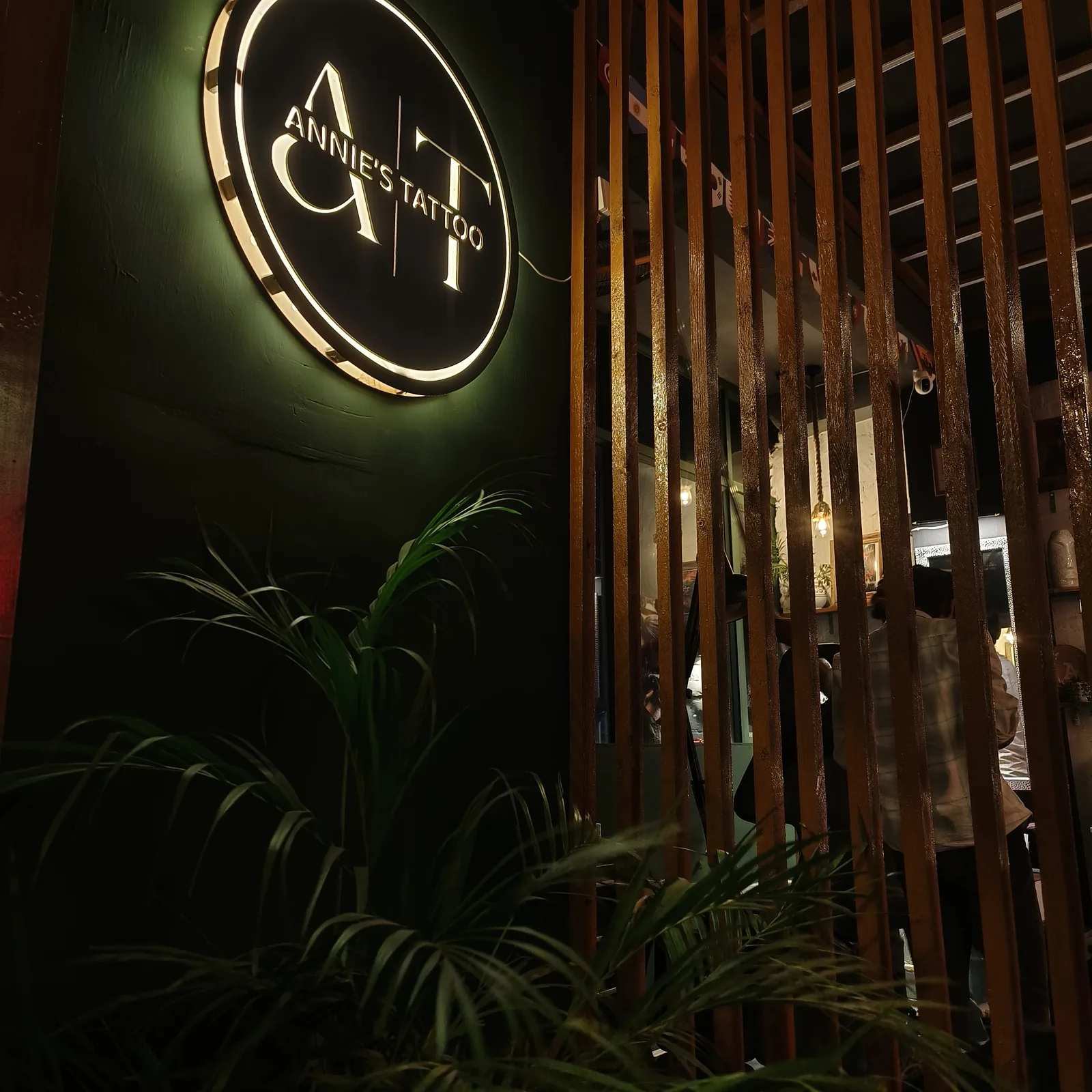
The glowing round A|T sign of Annie’s Tattoo studio in Chhattarpur, Delhi, on a deep green wall framed by palm leaves and wooden slats
Look for the glowing A|T

Send a quick note

Send it by

JournalNo. 013 min read

How to choose your first tattoo

A first tattoo is less about finding the perfect image and more about asking yourself a few honest questions. This is how we walk first-timers through it.

Start with the feeling, not the picture

Most people arrive with a folder of screenshots and a quiet worry that they will choose wrong. Put the references away for a minute and ask what you want the tattoo to hold: a person, a place, a turning point, or simply something beautiful. “I just love how it looks” is a perfectly good reason. Once the feeling is clear, the imagery becomes much easier to choose — and much harder to regret.

Decide on placement early

Placement shapes everything else: the size, the amount of detail, how the tattoo ages and how often you see it.

  • Visibility. Do you want to see it every day (forearm, wrist) or keep it mostly for yourself (ribs, upper back, thigh)?
  • Space. Fine detail needs room. A design that sings at palm size can turn muddy at coin size.
  • Comfort. Fleshier areas such as the outer arm, calf and thigh are generally kinder for a first session than ribs, feet or spine.
  • Everyday life. Think about sun, friction from straps and waistbands, and whether you will ever want to cover it.

Find the style that feels like you

Bold Japanese-inspired work, soft florals, fine-line pieces and geometric mandalas each carry a different mood and age in a different way. Save the tattoos you keep coming back to and notice what they share: line weight, how much black there is, how much skin is left open. That pattern is your style. Wherever you can, look at healed work and not only fresh photos.

Size it for the long run

Skin is alive, and lines soften a little over the years. Going slightly larger than you first planned usually means cleaner detail today and a tattoo that stays readable for decades. If you are unsure, ask for the stencil in two sizes and look at both in the mirror from across the room.

What to bring to your consultation

  • Three to five reference images, with a note on what you like about each
  • A rough idea of placement and size
  • Anything the design must include: a date, a flower, a word
  • Any skin conditions, allergies or medication we should know about
  • Questions. All of them.

The day before

Sleep well, eat a proper meal, drink plenty of water and skip alcohol the night before. Wear loose clothes that give easy access to the area. Feeling nervous is normal — a good studio will slow down, explain every step and never rush you into a decision.

If it takes three conversations to get there, that is fine. It is staying for a long time; it deserves the time.

JournalNo. 023 min read

The meaning behind Japanese tattoo motifs

Japanese tattooing is a visual language. Every creature, flower and wave carries a meaning — and the way they are combined tells the story.

A language, not a catalogue

Traditional Japanese tattooing grew up alongside woodblock printing in the Edo period, and the two share the same heroes, flowers and rolling waves. Motifs are rarely chosen alone. A main subject, a seasonal flower and a background of wind, water or cloud are composed together, a little like a sentence.

Creatures

  • Koi. Perseverance. In the old legend a koi that fights its way up the waterfall at the Dragon Gate becomes a dragon. A koi swimming upstream is often read as a struggle still in progress; downstream, as one already overcome.
  • Dragon. Wisdom, protection and strength used for good. The Japanese dragon is a guardian of water and rain rather than the fire-breathing monster of Western stories.
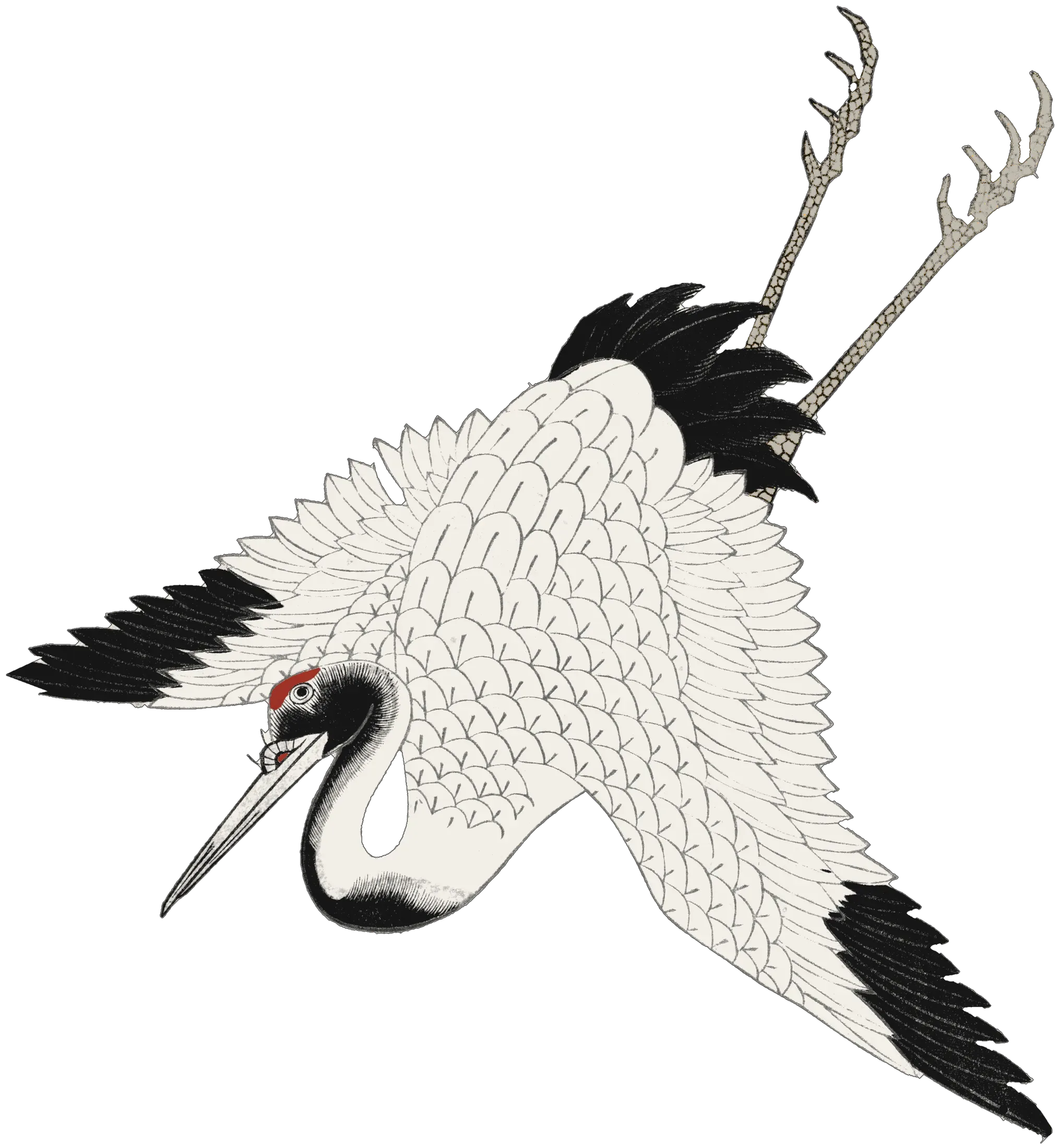
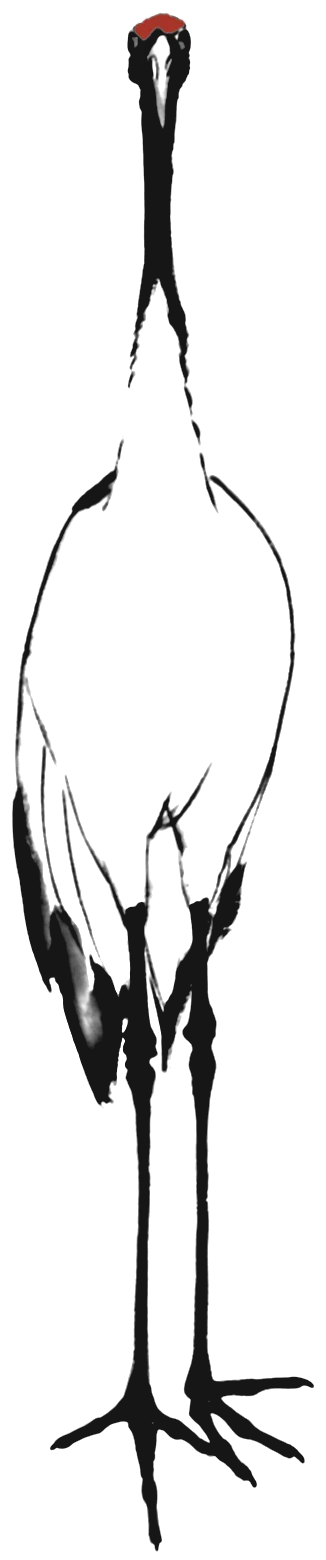
  • Crane. Long life, good fortune and loyalty. Cranes are said to live a thousand years, which is why a thousand folded cranes make a wish.
  • Snake. Protection from misfortune, and renewal: the old skin is shed and left behind.

Flowers

  • Chrysanthemum. Longevity and quiet dignity. It is the imperial flower, and its radiating petals echo the sun.
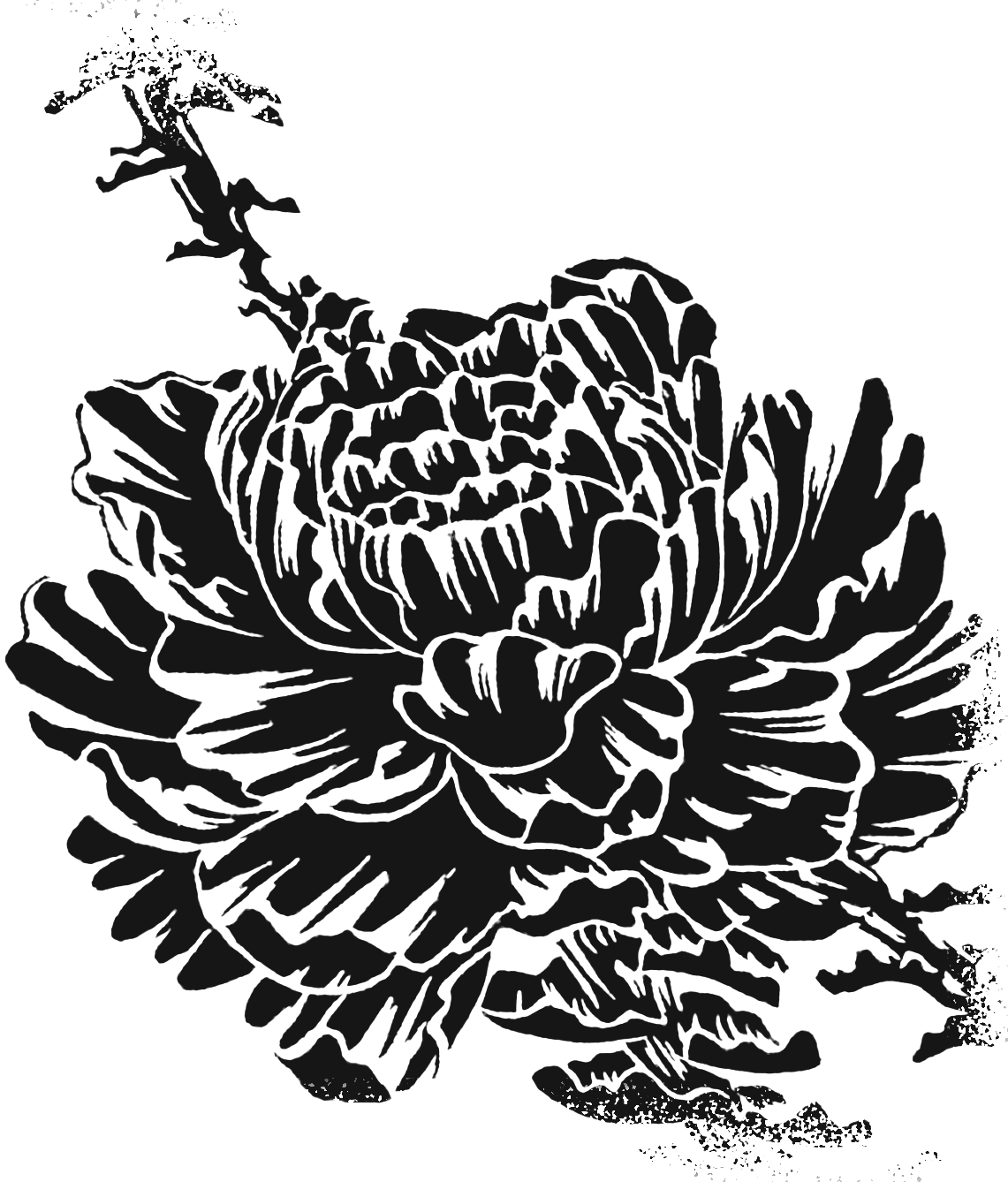
  • Peony. The “king of flowers”: prosperity, boldness and courage. Often paired with a fierce animal to balance power with beauty.
  • Cherry blossom. The beauty of things that do not last. It blooms for a few days and falls at its peak.
  • Lotus. Rising clean from muddy water: clarity and awakening. It is loved in Japan and in India alike, which is one reason it sits at the heart of so much of our work.

Masks and guardians

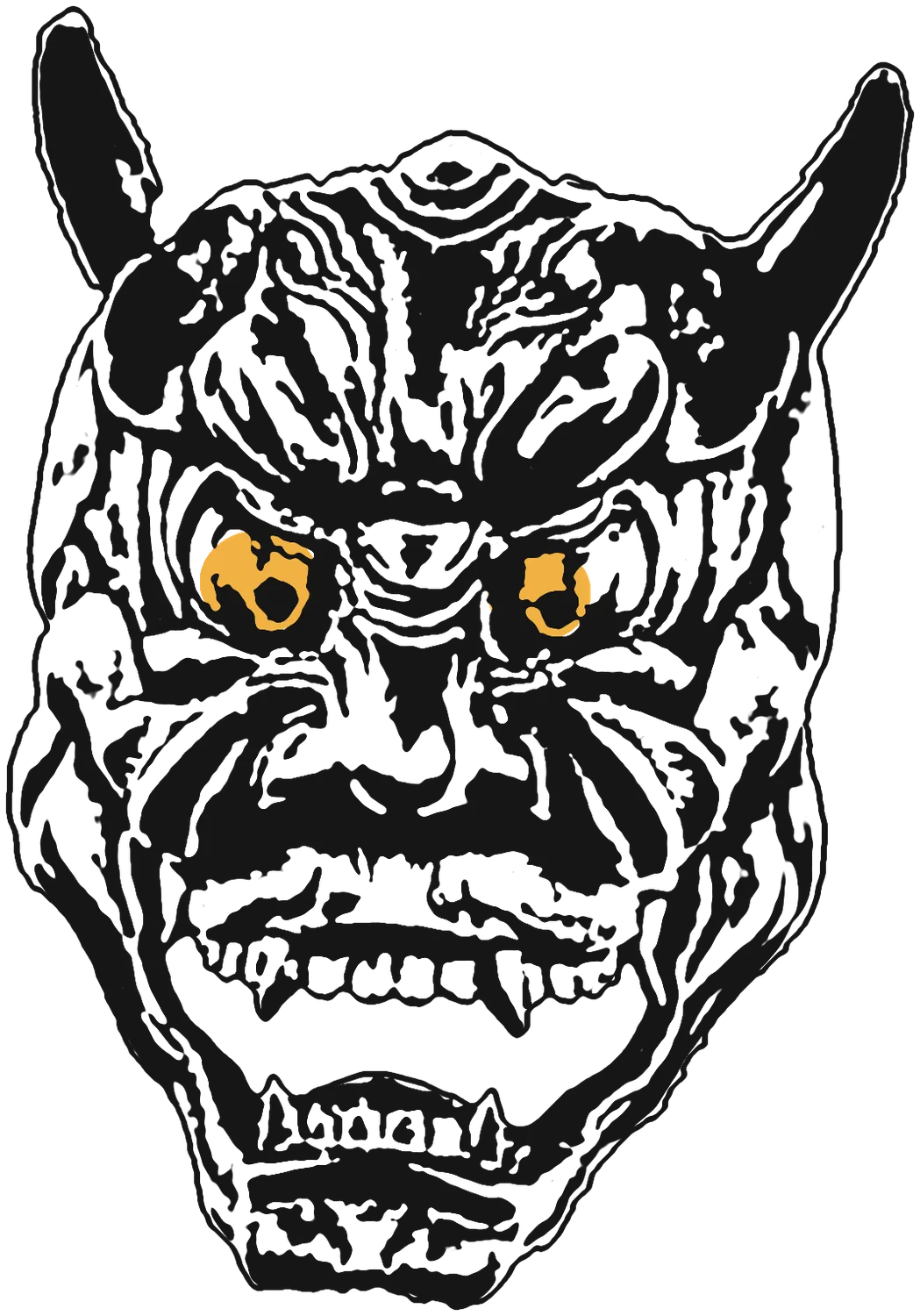
The Hannya mask comes from Noh theatre and portrays a woman transformed by jealousy and grief. Worn as a tattoo it is traditionally a protective charm that turns bad luck away — and a reminder of how complicated human feeling can be.

Wind, water and cloud

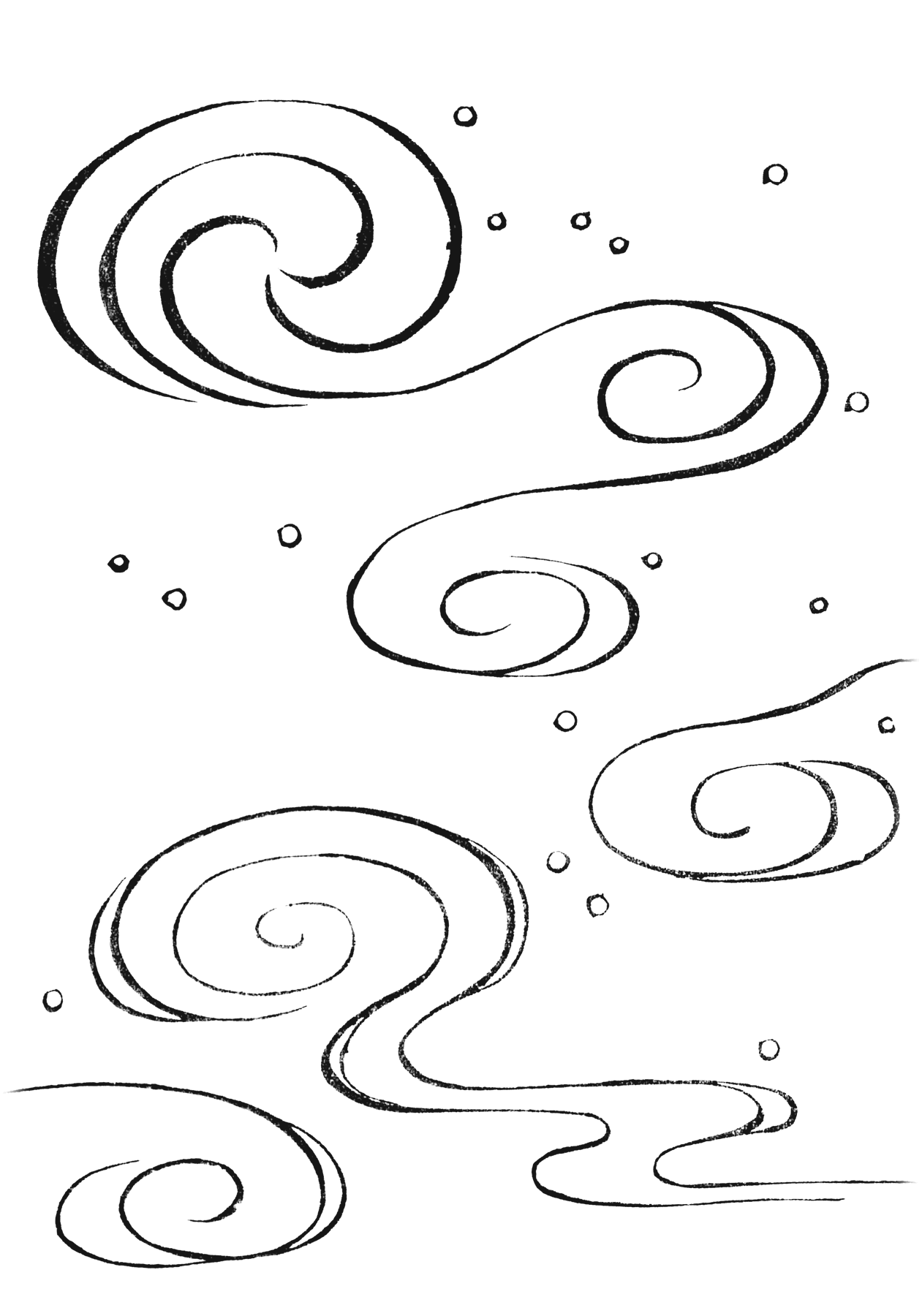
The background is never filler. Waves, wind bars and clouds bind a piece together, set its season and element, and give a large tattoo its flow across the body. A koi belongs with water, a dragon with cloud and storm. Maple leaves mean autumn and cherry blossom means spring, and traditionally the seasons are not mixed in one piece.

Choosing with respect

  • Learn the story before you wear it.
  • Pair subjects, flowers and seasons that belong together.
  • Let the design flow with the muscle. Japanese work is composed for the body, not placed on it like a sticker.
  • Make it yours. A motif’s meaning is the starting point; your reason is the rest.

JournalNo. 033 min read

Fine-line tattoo care

Fine-line work is delicate by design. A few habits — before the session, while it heals and for years afterwards — keep those thin lines crisp.

Why fine line needs a little more thought

Fine-line tattoos are made with a single needle or a very small grouping, and less ink goes into the skin than with bold traditional work. That is what gives them their pencil-drawn lightness. It is also why placement, healing and sun habits matter more than usual.

Plan for longevity

  • Give it room. Tiny details packed close together can blur into each other as lines soften with time. Slightly bigger and slightly more open looks better in ten years.
  • Choose the spot wisely. Skin that rubs or flexes constantly — fingers, palms, the sides of the feet — fades fastest. Forearms, upper arms, collarbones, ribs, the back and calves hold fine lines well.
  • Trust your artist on line weight. A hair thicker than you imagined often heals into exactly what you imagined.

The first two weeks

Follow the aftercare instructions your artist gives you; they know how they worked your skin. In general:

  • Wash gently with clean hands, lukewarm water and a mild, fragrance-free soap, then pat dry with a clean paper towel.
  • Use a thin layer of the moisturiser your artist recommends. Less is more; a heavy coat can suffocate healing skin.
  • Do not pick or scratch the flakes. A fine line can lift out with a scab.
  • No swimming, soaking, saunas or direct sun until it has healed.
  • Wear loose, breathable clothing over the area.

What is normal, and what is not

Light redness, tenderness and a little flaking in the first days are normal. Lines can look cloudy or slightly faded while the skin peels, and settle again after about a month.

Redness that spreads, swelling that gets worse, heat, pus or a fever are not normal. See a doctor promptly, and let your artist know.

Keeping it crisp for years

  • Sunscreen. Once the tattoo has fully healed, use SPF 30 or higher whenever it is exposed. Sunlight is the main reason fine lines fade.
  • Moisturise. Healthy, hydrated skin shows ink better.
  • Go easy on exfoliants. Keep strong scrubs and peels away from the tattoo.

About touch-ups

It is common for a fine-line piece to want a small touch-up once it has healed — a spot where a line settled lighter than the rest. Wait until the skin has completely calmed down, then send us a photo taken in daylight and we will advise.

JournalNo. 043 min read

Designing a custom mandala

A mandala looks intricate, but it grows from a handful of simple decisions. This is how we build one around you.

What a mandala is

Mandala is the Sanskrit word for circle. In Hindu and Buddhist traditions it is a map of the cosmos and an aid to meditation: the eye starts at the outer edge and travels inward to a still centre. As a tattoo it keeps that feeling — balance, focus, a sense of returning to yourself. In India the form is everywhere, from temple ceilings to the rangoli drawn on a doorstep and the mehndi on a bride’s hands. Designing one in Delhi means drawing in a very old local accent.

It starts with the centre

Every mandala begins with a seed. We will ask what belongs in yours: a lotus for growth, a sun for energy, a moon for change, an initial, a birth flower, or simply open skin. Everything else radiates from that choice.

Choose your symmetry

The number of repeats around the circle changes its character.

  • Six or eight feels calm, open and classic, and suits smaller pieces.
  • Twelve or sixteen is richer and more ornamental, and needs more room.
  • Layered counts — eight petals inside sixteen — create the blooming depth you see in our larger work.

Build the rings

We draw outward ring by ring, alternating dense bands with open ones so the eye has somewhere to rest.

  • Petals. Rounded for softness, pointed for energy.
  • Geometry. Triangles, diamonds and fine grids add structure.
  • Dotwork. Shading built from stippled dots gives depth without heavy black.
  • Negative space. Untouched skin is what keeps fine detail readable.
  • Ornaments. Drops, beads and hanging chains let the design flow along the body.

Make it fit the body

A mandala does not have to be a full circle. Half mandalas sit beautifully on the sternum, under the collarbones or above the knee; full circles love a shoulder, the upper back, a thigh or a forearm. Elbows and knees are striking but slower to heal. We print the stencil in a couple of sizes and place it on you before anything is final, because the symmetry has to line up with your centre line, not a ruler’s.

From sketch to skin

  1. Conversation. Meaning, placement, size and references.
  2. Sketch. Your mandala is drawn from scratch, never copied from someone else’s skin.
  3. Refine. You see the design before your session and can ask for changes.
  4. Stencil and session. Precise placement, then patient linework. Larger pieces may be split across sittings.

No two are alike. That is the point.

JournalNo. 053 min read

Tattoo aftercare guide

A tattoo is finished by the healing, not the needle. Here is a simple, general guide — your artist’s own instructions always come first.

The golden rule

Every artist works the skin a little differently and every body heals in its own way. Treat this as general guidance and follow the specific instructions you are given at the studio. If you have a medical condition, an allergy or take regular medication, speak to your doctor before getting tattooed.

The first 24 hours

  • Leave the covering on for as long as your artist advises.
  • Wash your hands before you touch the tattoo. Every time.
  • For the first wash use lukewarm water, a mild fragrance-free soap and your fingertips only. Rinse away any plasma and excess ink, pat dry with a clean paper towel and let the skin breathe for a few minutes.

Days 2 to 14

  • Wash gently twice a day.
  • Apply a very thin layer of the aftercare product your artist recommends. The skin should look barely moisturised, never shiny or wet.
  • Expect flaking and itching as the top layer sheds, much like mild sunburn. Do not pick, scratch or peel; a light tap or a little moisturiser takes the edge off.
  • Wear clean, loose, breathable clothing and sleep on fresh sheets.

What to avoid while it heals

  • Pools, the sea, hot tubs, baths and long steamy showers (quick showers are fine)
  • Direct sunlight and tanning
  • Workouts that stretch, rub or soak the area in sweat during the first few days
  • Tight straps, waistbands or shoes over the tattoo
  • Dust, pets and other people’s hands
  • Shaving or waxing over the area until it has fully healed

Healing in Delhi weather

In summer heat and monsoon humidity, sweat and dust are the enemy: rinse sweat off gently, keep the tattoo dry, and cover it with loose cotton when you are outdoors. In winter the dry air tightens skin, so moisturise a little more often.

When to see a doctor

Some redness, warmth, tenderness and clear or ink-tinted fluid in the first couple of days are part of normal healing. See a doctor promptly if you notice:

  • redness or swelling that spreads, or gets worse after the first few days
  • increasing pain, heat or an unpleasant smell
  • thick yellow or green discharge
  • red streaks moving away from the tattoo
  • fever, chills or feeling generally unwell
  • a rash or raised, very itchy bumps that could suggest an allergic reaction

Do not wait it out and do not self-medicate. Tell us as well, so we can help.

The long run

The surface usually heals in two to four weeks; the deeper layers take a couple of months. After that, sunscreen whenever the tattoo is exposed and regular moisturiser will keep it looking fresh. If a spot has healed lighter than the rest, send us a photo once everything has settled and we will advise on a touch-up.

More than ink.
A place to be yourself.

Annie’s Tattoo — the studio of tattoo artist Annie Gurung — began with a simple belief: a tattoo is never just a drawing on skin. It is a feeling, a memory, a person, a new beginning — and it deserves to be made with care, by people who listen first.

Why we exist

We built the kind of studio we always wanted to walk into ourselves. No judgement, no rush, no pressure to pick something off a wall. Just honest conversation, good art and a calm room in Delhi where you can be exactly who you are — whether this is your first tattoo or your fifteenth.

The round, backlit A|T Annie’s Tattoo sign glowing on a deep green wall at the Chhattarpur studio, with palm leaves below and warm wooden slats beside it.
Look for the glowing A|T. If you can see it, you have found us.

How a tattoo happens here

Every piece follows the same unhurried path, and you set the pace.

  1. ConsultationWe start by talking — your idea, the story behind it, placement, size and how you want to feel when you look at it. Bring references, a half-formed thought, or nothing but a feeling.
  2. Custom designWe draw your piece from scratch. You see it, sit with it and ask for changes. Nothing goes on skin until it feels like yours.
  3. The sessionYour day, at your pace. We explain each step, take breaks whenever you need them and check in often.
  4. AftercareYou leave with clear healing instructions, and we stay a message away while your tattoo settles in.

Our hygiene promise

Your safety is never negotiable. For every client, every time:

  • Single-use needles, opened in front of you and disposed of safely after your session.
  • Sterilised equipment — no exceptions, no shortcuts.
  • A fresh setup per client: new barriers, new ink caps, clean surfaces, fresh gloves.

If you ever want to know how something is cleaned or prepared, ask. We are happy to show you.

The studio lounge at Annie’s Tattoo: red neon lettering reading Annie’s Tattoo on a whitewashed brick wall, above a grey sofa, bookshelves and a guitar.
Our name in red neon, on whitewashed brick.

The space

We wanted the studio to feel less like a clinic and more like a friend’s living room: deep green walls, warm wood, plants in every corner and books to flip through while you wait. The red neon spells our name across the brick; the glowing A|T sign tells you that you have arrived.

Every tattoo is a collaboration — a story we create together. When you are ready to begin yours, we would love to hear it.

Book your appointment

Artwork credits

Standing on the shoulders of masters.

The woodblock imagery on this site — waves, cranes, koi, dragons, flowers and landscapes — is adapted from Japanese prints and ink paintings that are in the public domain, shared by museums through their open-access programmes. We re-inked them in our own palette. The mandalas, ornaments, icons and flash designs are drawn for Annie’s Tattoo.

Original works

  • Crane, from the Okyo Picture Book (woodblock-printed folding book)
    after Maruyama Okyo (1733-1795), 1850. Cleveland Museum of Art (Open Access) — CC0. View the original
  • Chrysanthemums, from Genpo yoka (A Garden of Jade-like Flowers)
    Ito Jakuchu (1716-1800), 1768. Waseda University Library (scan hosted on Wikimedia Commons) — Public Domain. View the original
  • Flowering cherry branches, from Genpo yoka (A Garden of Jade-like Flowers)
    Ito Jakuchu (1716-1800), 1768. Waseda University Library (scan hosted on Wikimedia Commons) — Public Domain. View the original
  • Flowering plum, from Genpo yoka (A Garden of Jade-like Flowers)
    Ito Jakuchu (1716-1800), 1768. Waseda University Library (scan hosted on Wikimedia Commons) — Public Domain. View the original
  • Lotus: withered leaf and bud, from Genpo yoka (A Garden of Jade-like Flowers)
    Ito Jakuchu (1716-1800), 1768. Waseda University Library (scan hosted on Wikimedia Commons) — Public Domain. View the original
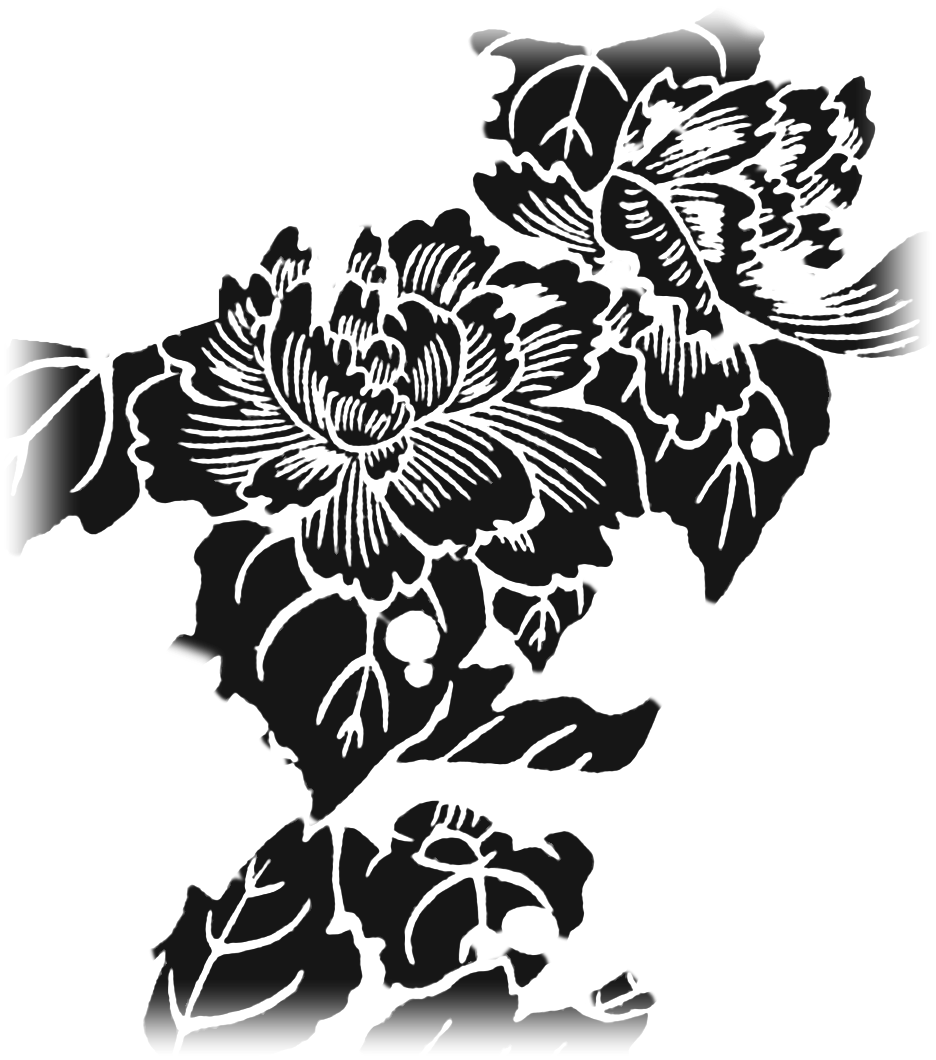
  • Peonies with spider, from Genpo yoka (A Garden of Jade-like Flowers)
    Ito Jakuchu (1716-1800), 1768. Waseda University Library (scan hosted on Wikimedia Commons) — Public Domain. View the original
  • Peony, from Genpo yoka (A Garden of Jade-like Flowers)
    Ito Jakuchu (1716-1800), 1768. Waseda University Library (scan hosted on Wikimedia Commons) — Public Domain. View the original
  • Carp Swimming by Water Weeds (fan print)
    Katsushika Hokusai (1760-1849), 1831. Cleveland Museum of Art (Open Access) — CC0. View the original
  • Hokusai manga, nihen (vol. 2) - Noh and Kyogen masks (page with hannya, namanari, ko-omote ...)
    Katsushika Hokusai (1760-1849), 1815. Wikimedia Commons (scan: Bibliotheque nationale de France, Gallica btv1b525042940) — Public Domain. View the original
  • Hokusai manga, nihen (vol. 2) - page with oryu (winged dragon), daryo, amaryo (rain dragon) and uwabami (giant serpent)
    Katsushika Hokusai (1760-1849), 1815. Wikimedia Commons (scan: Bibliotheque nationale de France, Gallica btv1b525042940) — Public Domain. View the original
  • Hokusai manga, nihen (vol. 2) - Ryu (dragon among storm clouds)
    Katsushika Hokusai (1760-1849), 1815. Wikimedia Commons (scan: Bibliotheque nationale de France, Gallica btv1b525042940) — Public Domain. View the original
  • Hokusai manga, vol. 5 (architecture): types of torii - the bronze torii ("do no torii")
    Katsushika Hokusai (1760-1849), 1816. Smithsonian Libraries (digitised copy hosted by the Internet Archive) — Public Domain. View the original
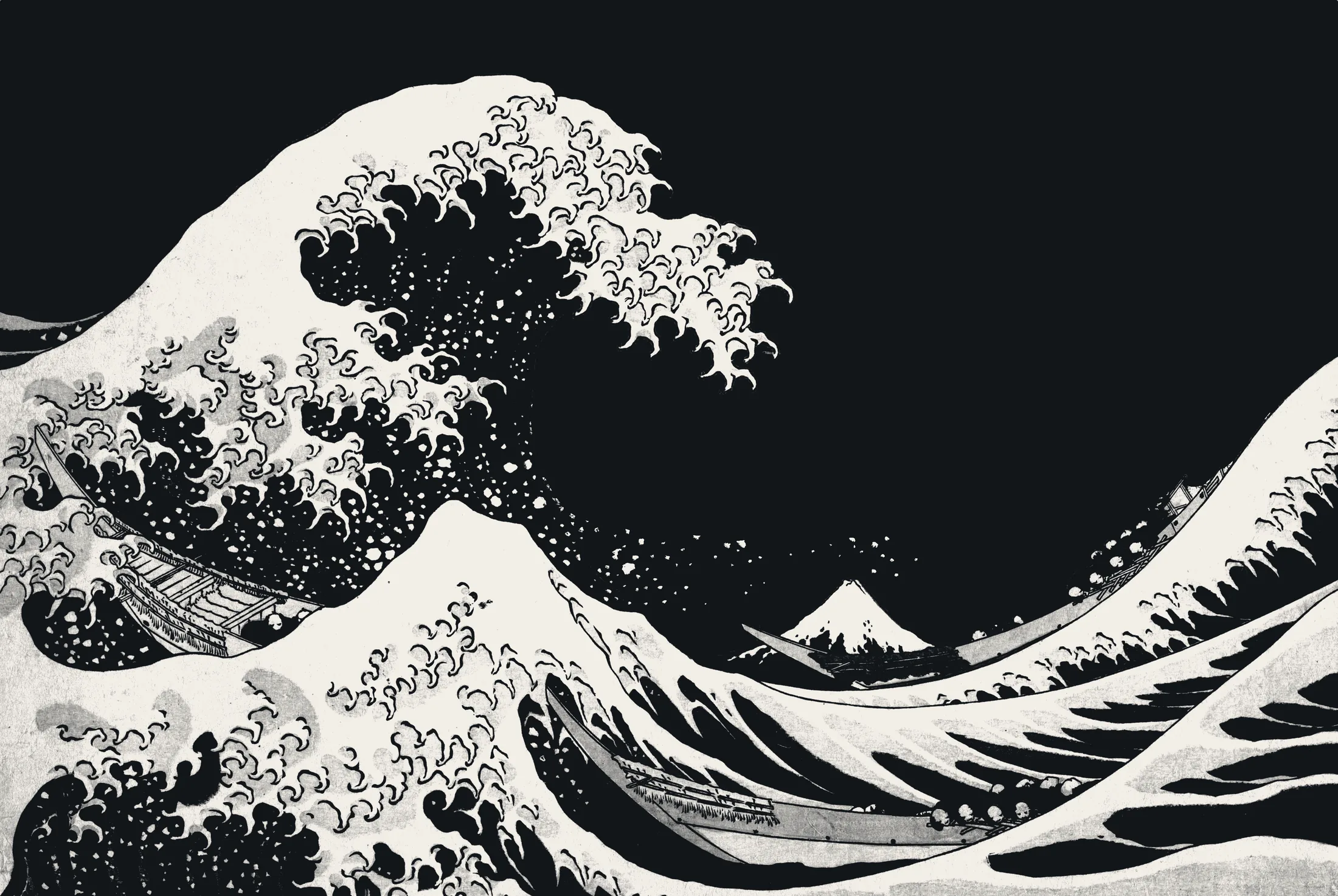
  • Under the Wave off Kanagawa (Kanagawa oki nami ura), also known as The Great Wave, from the series Thirty-six Views of Mount Fuji
    Katsushika Hokusai (1760-1849), ca. 1830-32. The Metropolitan Museum of Art (Open Access) — CC0. View the original
  • Carp and Waterweeds
    Katsushika Taito II (active c. 1810-50s), c. early 1830s. Cleveland Museum of Art (Open Access) — CC0. View the original
  • Hamonshu (Wave designs), vol. 1
    Mori Yuzan (d. 1917), 1903 (Kyoto: Yamada Geisodo). Smithsonian Libraries (digitised copy hosted by the Internet Archive) — Public Domain. View the original
  • Hamonshu (Wave designs), vol. 1
    Mori Yuzan (d. 1917), 1903 (Kyoto: Yamada Geisodo). Smithsonian Libraries (digitised copy hosted by the Internet Archive) — Public Domain. View the original
  • Hamonshu (Wave designs), vol. 2
    Mori Yuzan (d. 1917), 1903 (Kyoto: Yamada Geisodo). Smithsonian Libraries (digitised copy hosted by the Internet Archive) — Public Domain. View the original
  • Hamonshu (Wave designs), vol. 2
    Mori Yuzan (d. 1917), 1903 (Kyoto: Yamada Geisodo). Smithsonian Libraries (digitised copy hosted by the Internet Archive) — Public Domain. View the original
  • Hamonshu (Wave designs), vol. 2
    Mori Yuzan (d. 1917), 1903 (Kyoto: Yamada Geisodo). Smithsonian Libraries (digitised copy hosted by the Internet Archive) — Public Domain. View the original
  • Hamonshu (Wave designs), vol. 3
    Mori Yuzan (d. 1917), 1903 (Kyoto: Yamada Geisodo). Smithsonian Libraries (digitised copy hosted by the Internet Archive) — Public Domain. View the original
  • Cranes (pair of hanging scrolls; the frontal crane)
    Nagasawa Rosetsu (1754-1799), late 1780s. The Metropolitan Museum of Art (Open Access) — CC0. View the original
  • Netsuke of Hannya Noh Mask (carved wood) — museum photograph, redrawn here as an ink illustration
    Unidentified Japanese carver, mid-19th century. The Metropolitan Museum of Art — CC0. View the original
  • Dragon (dragon descending over waves)
    Utagawa Kuniyoshi (1798-1861), c. 1831. Wikimedia Commons — Public Domain. View the original
  • White Crane Flying across the Sun's Disc (surimono)
    Yashima Gakutei (1786?-1868), 1835?. The Metropolitan Museum of Art (Open Access) — CC0. View the original

With gratitude to The Metropolitan Museum of Art, the Art Institute of Chicago, the Cleveland Museum of Art, the Bibliothèque nationale de France and Wikimedia Commons contributors for keeping this art open to everyone.